
AI Hub · Foundations
How ChatGPT finds and cites websites
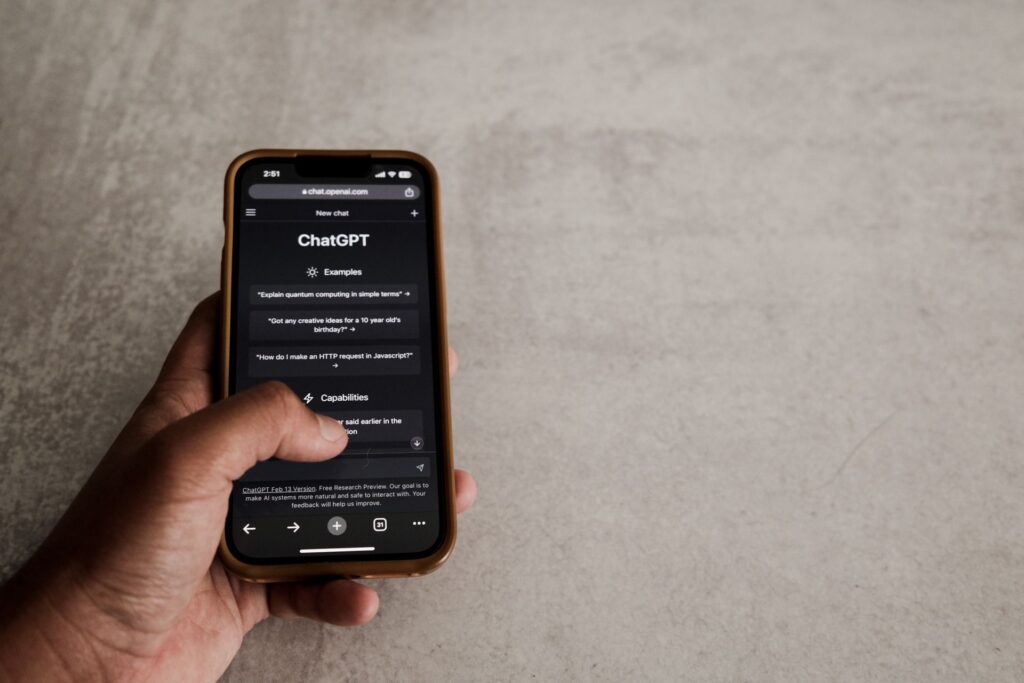
TL;DR: ChatGPT can answer from what it learned in training or, when it uses search, retrieve current web pages and link to them as sources. OpenAI uses separate crawlers for different jobs, and OAI-SearchBot is the one that affects whether a site can appear in ChatGPT search results. OpenAI does not publish how it ranks or selects sources, so the practical approach is to allow access, publish clear sourced answers and track referrals.
Does ChatGPT answer from memory or from the web?
Both. ChatGPT can respond from patterns learned in training, or it can search the web and base the response on retrieved pages, showing links to the sources. Which mode applies depends on the question and the product settings.
This distinction matters for strategy. Training-based knowledge changes slowly and cannot be edited by publishing a new page. Search-based answers draw on pages that exist now, which means your current content can affect them.
For most businesses the search mode is the realistic target. Questions about current services, comparisons, prices or recommendations in a local market tend to need fresh sources. A clear page on your own site is something you can influence directly, which is why this guide concentrates on retrieval.
New to the terminology? Read what is answer engine optimisation first.
Which OpenAI crawlers matter?
OpenAI documents three: OAI-SearchBot, which surfaces sites in ChatGPT search; GPTBot, which collects content that may be used to train models; and ChatGPT-User, which handles actions started by a user. Each is controlled separately in robots.txt.
The details come from OpenAI’s own documentation (OpenAI crawler overview).
| Crawler | Purpose | Effect of blocking |
|---|---|---|
| OAI-SearchBot | Surfaces sites in ChatGPT search features | Site is removed from ChatGPT search answers, though it may still appear as a navigational link |
| GPTBot | Collects content that may be used to train generative models | Signals content should not be used for training; independent of search |
| ChatGPT-User | Visits pages when a user asks ChatGPT to, such as retrieving a page | robots.txt rules may not apply, because the user starts the action |
The important point is that search and training settings are independent. A business can allow OAI-SearchBot to be discoverable in ChatGPT search while disallowing GPTBot if it prefers that content not be used for training. OpenAI says changes to robots.txt can take around 24 hours to take effect for search.
Check your robots.txt file and any firewall or CDN bot rules. Security tools sometimes block unfamiliar user agents without anyone intending it.
Key takeaway: allowing OAI-SearchBot is the technical prerequisite for appearing in ChatGPT search. Blocking GPTBot does not remove you from search.
How does ChatGPT choose which pages to cite?
OpenAI has not published how it ranks or selects sources for citations. What is known is that the system retrieves candidate pages for a query and links the ones that support its answer.
That means any specific claim about “the ChatGPT algorithm” is inference. Be careful with confident-sounding lists of ranking factors. Many come from small studies or from testing individual prompts, and results can change as the product changes.
Some reasoning is still safe. A system composing an answer needs passages it can read cheaply, trust and attribute. Pages that state the answer clearly, name their subject, show their sources and keep facts consistent are easier to use than pages that bury an answer in a long introduction.
There is also independent evidence that attribution is imperfect. Studies of AI search products have found cases where a syndicated copy was cited in place of the original publisher. Publishing the original, clearly dated and attributed, and keeping your brand details consistent are sensible ways to reduce that risk, though they cannot remove it.
How should you write for ChatGPT citations?
Write answer-first sections that respond directly to a customer question, support the answer with evidence, and keep each paragraph understandable on its own. This makes passages easier to retrieve and quote.
Practical habits that follow from how retrieval works:
- Use question headings. Match the way people phrase prompts, which are often longer and more conversational than search queries.
- Lead with the answer. One or two sentences, then context.
- Name the subject. Write “ChatGPT search” or “our audit”, not “it” or “this”.
- Cite primary sources. Link to documentation, standards and official data.
- Add comparison tables for options, costs and features, where honest and accurate.
- Keep facts consistent across pages, profiles and listings.
- Update key pages and show when they were last reviewed.
Content production at scale needs care. AI-assisted drafts can introduce errors or generic claims that weaken trust. Our AI content creation process pairs assisted drafting with subject-expert review and source checking, and the AI content quality checklist sets out what we verify before anything is published.
Entity clarity helps too. If a model cannot tell which business a page belongs to, it may attribute facts wrongly. See entity SEO for UK businesses for the steps.
How can you track visits from ChatGPT?
OpenAI’s publisher guidance says that sites allowing OAI-SearchBot can track referral traffic from ChatGPT in analytics tools, because ChatGPT adds the parameter utm_source=chatgpt.com to links in search results.
You can read the guidance in OpenAI’s publishers and developers FAQ. In Google Analytics 4, you can filter sessions by source and look at the landing pages receiving that traffic.
Treat the figures as a minimum. Visits that pass through an in-app browser, or where a user copies a link, may not carry the tag and can appear as direct traffic. A person may also read a citation without clicking, which leaves no trace in your analytics.
To gain a fuller picture, combine referral data with manual prompt checks. Record the exact prompt, date, location and which sources appeared, and repeat monthly. Our guide to measuring AI search visibility provides a template.
What are the limits of influence?
You can make your site accessible, clear and credible, but you cannot control whether ChatGPT cites you. Answers vary between users, sessions and product updates, and OpenAI does not offer a console to request inclusion.
Take care with any offer that promises guaranteed mentions in ChatGPT. Tactics such as mass-produced listicles, undisclosed paid placements or artificial review inflation carry reputational and policy risks, and may stop working when the product changes. Genuine, repeated, accurate mentions across credible sources are a safer long-term base than tricks.
It also helps to remember that ChatGPT is only one route. Google still sends far more visitors to most sites, so protect your search visibility while you improve for assistants. Compare the Google approach in how AI Overviews choose sources.
If you want an outside view of how you are represented today, our answer engine optimisation services start with a structured check across the major assistants.
Key takeaway: allow OAI-SearchBot, answer customer questions clearly with sources, track referrals with caution, and avoid guarantees.
Frequently asked questions
How do I get my website cited by ChatGPT?
There is no guaranteed method. Start by allowing OAI-SearchBot in robots.txt so your pages can appear in ChatGPT search. Then publish clear, answer-first content with cited sources, keep your business details consistent and update key pages. These steps improve your chances but cannot ensure a citation.
Should I block GPTBot?
That is a business decision. OpenAI says GPTBot collects content that may be used to train its models, and disallowing it signals you do not want that. It is independent of OAI-SearchBot, so you can block GPTBot and still allow your site to appear in ChatGPT search results.
What is OAI-SearchBot?
OAI-SearchBot is OpenAI’s crawler for surfacing websites in ChatGPT search features. OpenAI states that allowing it in robots.txt helps your site appear in search results, while opting out removes the site from ChatGPT search answers, although it may still appear as a navigational link. Changes can take around 24 hours.
Does ChatGPT use Google or Bing to find pages?
OpenAI does not fully document its search sources, so any definite statement would be a guess. Some industry commentary suggests partner indexes play a role. The safest approach is to keep pages indexable on all major search engines, including Bing, and to allow OAI-SearchBot.
How can I tell if ChatGPT sends me traffic?
Check your analytics for sessions with the source chatgpt.com. OpenAI says ChatGPT adds utm_source=chatgpt.com to links in search results. Some visits may arrive untagged and appear as direct, so treat the figure as a minimum and supplement it with manual prompt checks.
Do I need llms.txt for ChatGPT?
OpenAI’s crawler documentation does not list llms.txt as a requirement, and there is no published confirmation that it affects ChatGPT citations. It is a low-cost optional file, not a substitute for clear content and crawler access. Our llms.txt guide explains what is known and what is not.
Why does ChatGPT sometimes cite a copy of my content instead of my page?
Attribution in AI search is imperfect, and studies have found syndicated or republished copies cited instead of originals. Publishing the original first, with clear dates and authorship, and avoiding unnecessary duplication on other sites, reduces the risk. It cannot be eliminated.
Find out how assistants describe your business
We will check crawler access, key pages and the questions your customers ask.
Get an AI visibility check