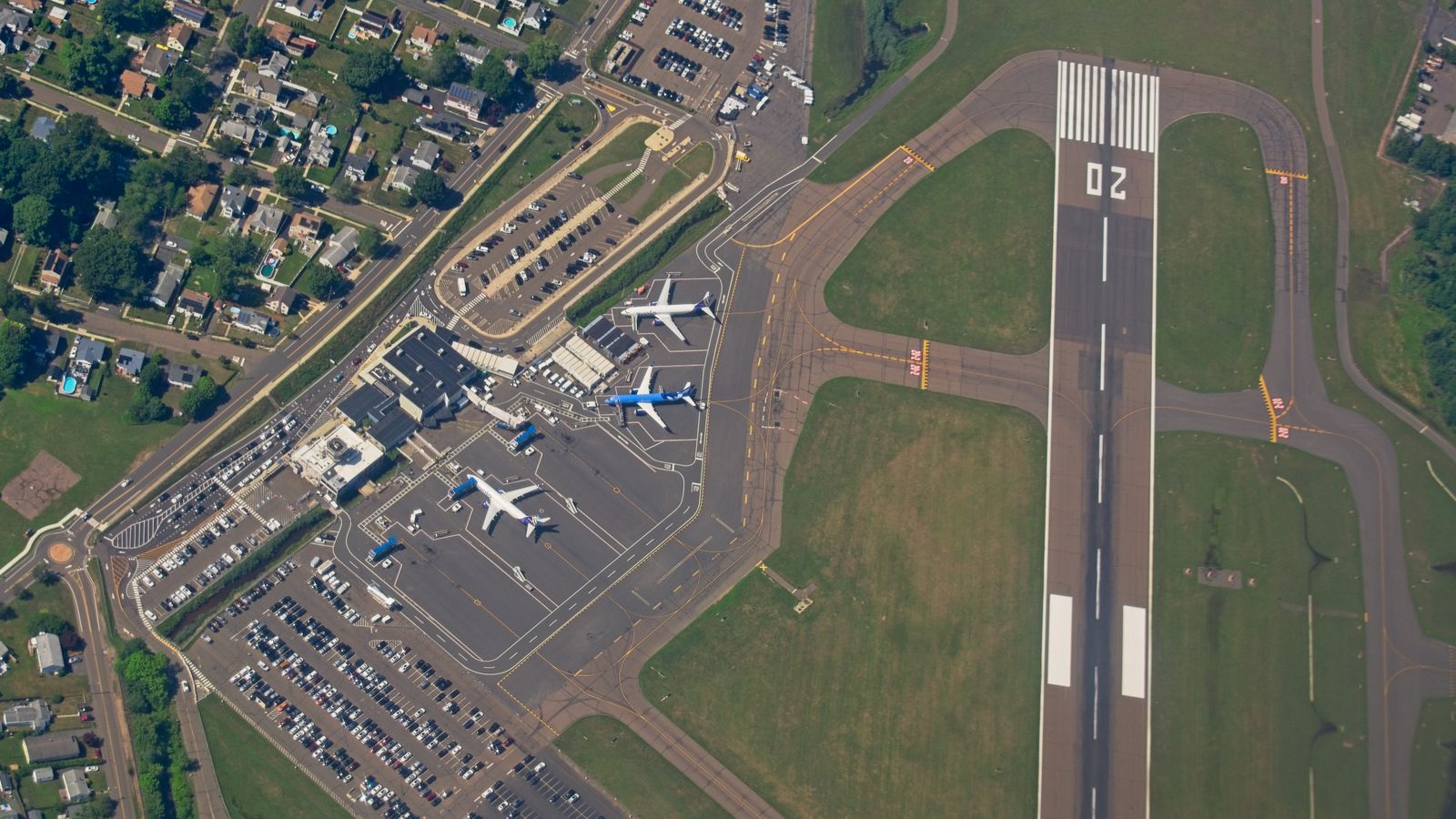
We call it the Flightpath Method because it always runs in the same order: Radar, Runway, Lift, Altitude. Skipping a stage is exactly how businesses end up paying for ‘a few miniscule tweaks’ dressed up as a strategy. Here’s what happens in each one, and what you’ll see from us while it does.
Radar — where do you actually stand today?
We check what Google, ChatGPT, AI Overviews and Perplexity currently show for the searches your customers use, audit your Google Business Profile and website, and find out who is outranking you and why. This is the same work behind the free visibility check, and it’s where every engagement starts, paid or not.
Radar typically takes one to two weeks. You get a written findings report — not a dashboard — covering where you rank now, what your competitors are doing that you aren’t, and the state of your Google Business Profile, your site’s technical health, and your visibility inside AI answers.
Runway — what needs fixing before anything else?
Before anything can take off, the basics need to be right: consistent business details everywhere online, a technically sound website, an accurate Google Business Profile, and any glaring gaps closed. This stage is unglamorous and it’s where most of the trust-building happens — with Google, and with AI tools reading the same signals.
Runway usually runs through the rest of month one and into month two. It’s the least visible stage from the outside — nothing here is designed to look impressive in a report — but skipping it is the single biggest reason SEO work quietly fails to move anything, because content and links built on a shaky technical and profile foundation don’t hold.
Lift — how do you actually build visibility?
With the foundations sound, we build: content that answers real customer questions, links and mentions from other genuine sites, reviews, citations. This is the stage that typically takes three to six months to show meaningfully in rankings, because it depends on Google and other sites building trust in you over time, not on any single change.
This is where most of the visible, ongoing work happens — new pages published, outreach for genuine links and mentions, review generation, and the steady accumulation of evidence to both Google and AI tools that your business is real, current and worth recommending. It’s reported on monthly, in the same plain-English format every stage uses.
Altitude — how do you hold and grow the position?
Rankings that are won can be lost again if the work stops. Altitude is the ongoing stage: monitoring, refreshing content, catching problems early, and reporting what changed and why, every month, in plain English.
Altitude is where most established accounts live long-term — the intensive build-up of Lift settles into steady maintenance and incremental growth, punctuated by a fresh push whenever a competitor moves or an opportunity appears.
Why does the order matter so much?
A lot of what gets sold as SEO is really a handful of Lift-stage tasks — some content, a few links — applied to a business whose Runway was never fixed: a Google Business Profile with the wrong category, opening hours that don’t match reality, or a website Google can barely crawl. That combination can look active on a monthly report and still do almost nothing, because the foundation underneath it is loose. Running Radar and Runway first, every time, is what stops that happening on our watch.
How does this apply to AI search specifically?
The same four stages cover AI visibility because the underlying mechanics overlap so heavily with ordinary search — Radar checks what AI tools currently say about you, Runway fixes the same consistency and technical issues that matter to both, and Lift builds the mentions and citations that both Google and AI tools respond to. There’s no separate track to run in parallel, which is exactly why we don’t sell AI visibility as a separate product.
What does this look like for a website build instead of SEO?
The same shape carries across: understanding what’s genuinely needed before any design work starts (Radar), getting the technical foundation and page structure right (Runway), building out the content and structured data that actually earns rankings (Lift), and the care plan afterwards playing the role Altitude plays for an SEO retainer — catching problems and keeping the site current rather than letting it quietly decay.
Do you skip stages for urgent work?
No. Skipping Radar or Runway to chase a quick win is exactly the pattern that leaves a business paying for tweaks with no foundation underneath them. Every engagement runs Radar first.
How long does the whole method take?
Radar and Runway typically take the first month or two. Lift is where most of the three-to-six month timeline for visible results happens. Altitude continues for as long as you’re working with us.
Is this the same process for AI search as for Google?
Yes. Because the two overlap so heavily, the same four stages cover both, which is part of why we don’t sell AI visibility as a separate service.
What do I see from you at each stage?
A written report at the end of Radar setting out where you stand, then a monthly report through Runway, Lift and Altitude listing exactly what was done.
Does the method change for a website build?
The same shape applies — understanding what’s needed before building, getting the technical foundation right, then adding content and structure, with maintenance afterwards playing the role Altitude plays for SEO.
Why is it called the Flightpath Method?
The four stages — Radar, Runway, Lift, Altitude — follow the same logical order an aircraft does: check the surroundings, prepare for takeoff, climb, and hold a cruising height. It’s a memorable way to keep the order honest, not a gimmick layered on top of unrelated work.